Tag Archives: Wellness

I am all about creating a lifestyle that prioritizes physical and mental wellness. Of course, “wellness” comes in many different shapes, sizes, and colors and there is no perfect formula for everyone. I am not a nutritionist, therapist, or expert of any kind, but I am an informed explorer and am happy to share my practices and what has worked for me to provide perspective for you to consider.

Let It Go

I recently happened across an inspirational quote that truly spoke to me:

“You’ve done your best today, now let it go.”

A simple sentence with a deep and impactful meaning, one that I very much needed to read, and feel many others could benefit from as well.

Like many, I have an extremely busy life: full-time job (the American version, not the French or Swedish version, meaning over 40 hours per week as oppose to under 36 – get on board USA), a second job (teaching yoga), this blog (the writing and the social media management that comes with it), a household to run, an elderly dog to care for, and dedications to my family, friends, and interests. My plate is very full, sometimes to the point where I doubt my ability to manage all of it. In recent months, I have found myself struggling to keep up with all of my commitments and responsibilities, often feeling overwhelmed and drained.

Continue reading

Mantra Intention

In many of the yoga classes taught today, you will probably find that many instructors encourage the class to “set an intention” for the practice. This setting of the intention is typically done within the first minutes of class and can either be specifically assigned by the instructor or left open for the student. The inspiration behind the use of intention in certain schools of yoga is that said intention becomes a point of focus for the mind along with the breath to keep it stable and steady as well as dedicating energy to the manifestation or strengthening of the intention; in this way, the yoga practice becomes more than just a physical practice, but a moving meditation on various levels. For me, the fact that we do set an intention, something to mentally, emotionally, and even spiritually focus on along with the physical postures and movements is what makes yoga so magical and I why I love it so deeply.

yogaprayer

All that being said, it can be deeply challenging to choose an intention for your yoga practice and even more difficult to hold onto that intention throughout the class. Once you get going in the practice, it is very easy for the focus on the intention dwindle or even complete drop off. You may find yourself going over your to-do lists and what you need from the grocery store, or you may simply find yourself consumed by the physical efforts that are required of your body in the physical practice. Before you know it, class is cooling down and you never focused on your intention after the first sun salutation. This is completely normal and nothing to beat yourself up over – practice ahimsa (non-violence) – but obviously, we do want to work toward being able to hold our minds on an intention to strengthen our focus and the subject of the intention itself.

Continue reading

Johnny’s Weekend Roundup!

Ciao friends! I am starting a new series on this blog called “Johnny’s Weekend Roundup!” which I will be publishing every other week or so. The intention behind my roundup is share links to other online material for your weekend browsing that I found interesting, informational, and otherwise inspiring that hopefully you will as well since we are all like-minded people here!

So here it goes – Johnny’s Weekend Roundup for the weekend of August 12, 2016!

Continue reading

8 Things Fit People Do

Being the yoga instructor, #healthyfoodporn hashtag using Instagram cook, and lifestyle blogger that I am, I often receive a lot of questions about how to get fit and stay fit. Friends, acquaintances, and strangers come to me for my advice on how they can achieve greater health. I offer my tips and tricks like in the blog post here, and I always always always stand firm with my belief that being fit is about creating a healthy lifestyle for yourself that you can sustain over a long period of time rather than a quick fix diet or work out program. Also important, I always remind that a pant/dress size or scale number does not equivocate good health, but rather an overall feeling of wellness and ability.

All that being said, people still want to know how us-in-shape-people do it. I know lots of in shape people, and most of us have several things in common with the way we live our lives. So, I will share those with you now so that maybe you can see what we do and if those things appear to be ones you can do in your own life.

1. We prepare much of our own food

food prep

Fit people still go out, fit people still get take out; but fit people also buy whole food ingredients and cook/prep many to the majority of our own meals. By purchasing quality ingredients and handling the preparation of them, we are able to control the amounts of fat, sodium, sugar, etc. in our food as well as manage our portions. It’s just an integral part of the lifestyle. It means carving out time to shop for the groceries, cook, and pack the food; it means hella Tupperware and a messy kitchen, but you feel great, often saves money, and it can be more flavorful too!

I have looked into the flames….

i have looked into the flames.gif

…And I see Rubbermaid in your future!

tupperware

2. We make exercise a priority –

work.gif

It’s true; fit people make getting in movement an absolute priority in our day. I hear a lot of excuses along the lines of “I just don’t have time,” and that very well may be if you are just hoping for a random hour to open up in your day so you can fit a sweat in. The fact is, no matter how busy fit people are, they schedule the time for exercise in and rarely negotiate about it. It sometimes means getting up an hour earlier to make it to a before sunrise yoga or aerobics class or having lunch at your desk so you can squeeze in a gym sesh or spin class over your lunch break, but fit people will make it happen no matter what. Why? Because it makes us feel strong, it makes us feel good, and it makes us healthier and happier the rest of the time! The sacrifice of an hour is well worth it.

3. We drink tons of water –

sprinkler 2.gif

We are very blessed in the Western world to have access to clean running water. As much fun as water slides are, a much better use for all that water is using it for hydration! Hydration comes with many various health benefits including aiding digestion, purifying internally, releasing water retention and bloating, and even revving up metabolism. Fit people end up sweating a lot, and so we need a lot of water to replenish, and when we get it, our bodies are the happiest!

4. We sleep –

sleep

Fit people make sure to get ample rest and sleep; when you’re active, it is important to allow your body to recuperate on the daily. A lot of us might be considered grandmas in that we choose to turn in early so that we can catch a full 7-8 hours, but here again, we make it a priority and it feels so good!

5. We are active in our free time –

hikin.gif

A lot of fit people choose hobbies and activities in their free time that involve getting outdoors and moving, and they genuinely enjoy it. Here again, it is all part of the lifestyle! For me, I enjoy taking my dog to the park after work or going on a Saturday hike, some people enjoy surfing in the mornings or playing football in the park on a weekend afternoon. These are all activities enjoyed in addition to normal exercise and movement that we simply find fun and fulfillment in while also being active and getting fresh air.

6. We eat, a lot –

food

Yes, we prepare much of our own food, yes we control our portion sizes, but that doesn’t mean we are eating just kale and orange segments. Healthy people eat every few hours and make sure to get plenty of good foods with lots of nutrition. Starving yourself for 10 hours straight does not equal health, feeding yourself nutritionally rich foods every 2-4 hours usually does. Which would you choose?

7. We say no –

no

Sad Panda, but sometimes we have to say no. Sometimes we turn down the slice of cake if we’ve been having too much sugar or we opt for the chicken and vegetables rather than the burger if we’ve been going to town on the carbs and salt. This is NOT to say you can never have the cake or the burger, but you have to check in with yourself and see what is going to make you FEEL the best, and sometimes that means saying no.

Here’s a sad Panda for you

sad panda.gif

8. We say YES!

yes.gif

Living a life of strict eating patterns that never permits a little indulgence is not fun or sustainable. It is important to enjoy what life puts on the plate for you, and sometimes that is a big pizza or brownie Sunday. Don’t be afraid to indulge and enjoy: make sure to treat yourself! Complete deprivation is not the goal here, its balance. Your dessert Monday through Thursday might’ve been a small piece of dark chocolate, but on Friday go ahead and have the Pizookie! You are golden! I live by an 80%/20% rule: 80% of the time I eat those traditionally healthier choices, 20% of the time I eat whatever the hell I want without apologies! So eat up me hearties yo-ho!

So, those are some of the things us “fit” people do. But remember, even if you are starting a new fitness journey, be kind to yourself and love yourself as you are now and along every step of the way!

Why Meatless Monday?

Ciao friends! If you read this blog and/or follow me on social media, then you will know that I am a big supporter of the Meatless Monday movement that is taking the globe. This past month, the folks behind all the vegetarian magic at Meatless Monday reached out to me and have made Johnny La Pasta (that’s me!) an official representative of Meatless Monday!

blogger_onwhite

So, today, I want to talk to you a little bit more about Meatless Monday, why I practice it, and why you should try it out!

why 2

Many reasons!

So what is Meatless Monday? It is a simple movement aiming to inspire the world to cut their meat consumption completely one day a week for our bodies and for the planet. The statistics around the benefits of what going meatless one day a week does and can do are frankly astounding.

Continue reading

Vegan Cauliflower Steak Marsala

As you may be aware, I have recently become entranced by the fantastic vegetable that is cauliflower and all the vegan sorcery you can perform with it. Remember when I made Cauliflower Steak and highlighted the basic technique for turning a head of Cauliflower into a steak? Well, Oops I did it again, and this time got fancy!

oops.gif

with the Cauliflower.

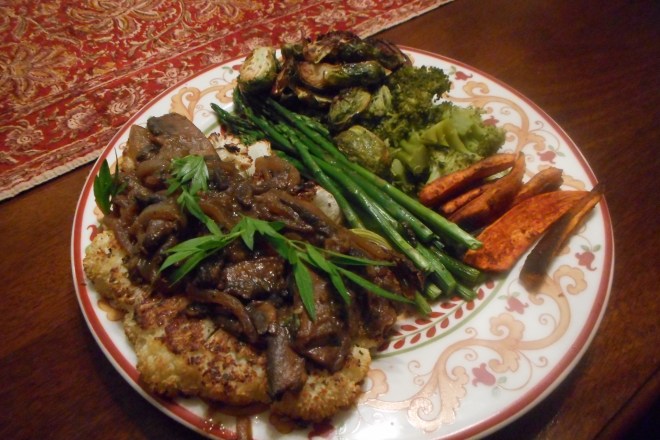
This is my original Cauliflower Steak Marsala, which I am very proud to have developed. Inspired by Italian restaurant staple Chicken Marsala and steakhouse classic Steak Marsala, I have created a vegan friendly version of these beloved dishes.

I cut a head of cauliflower into steak looking slices, season them well as you would a piece of meat, and bake them to a crisp tenderness that possesses a meaty texture which I then effectively use to replace chicken or beef. Then I concoct a near traditional Marsala wine and mushroom sauce. Since there is no meat, I have built the sauce to be even richer in flavor than the traditional with a few heartier components. My vegan Marsala sauce includes sweet caramelized onions for another added layer of flavor and texture. Rather than using cremini or button mushrooms, I use strips of hearty, meaty Portobello mushrooms to make the meal more substantial. I add thyme and garlic for an earthy note to contrast the sweetness of the wine.

i love magic

Vegan Magic!

Lastly, I have come up with another piece of vegan magic! Most marsala wine sauces call for butter to thicken the sauce, which is great because…butter. Butter, however, is not vegan and quickly adds another couple hundred calories of fat to the dish. Instead, I puree cannellini beans which are buttery in texture and taste, and add a bit to the sauce. The pureed beans dissolve into the sauce which not only thickens the sauce, but gives it a nice silky smooth texture just like a traditional Marsala sauce.

The result is a rich, hearty, and gourmet meal that is 100% vegan! Serve with your favorite vegetable sides and you will blow your vegetarian and meat-loving friends alike away! I am super proud of how this development turned out and I hope you enjoy it too!

Vegan Cauliflower Steak Marsala

  • Servings: 2
  • Difficulty: easy-intermediate
  • Print

Ingredients:

  • 1 large head cauliflower
  • 1 large yellow onion, sliced thin
  • 2 Portobello mushrooms, sliced into ¼ inch thick strips
  • 1 cup Marsala wine
  • ¼ cup vegetable stock
  • 1 ½ tablespoons pureed cannellini beans
  • 2 tablespoons garlic powder
  • 2 tablespoons Herbs de Provence
  • 1 tablespoon fresh thyme leaves
  • 1 teaspoon minced or crushed garlic
  • 2 tablespoons extra virgin olive oil
  • Sea salt and black pepper
  • Parsley for garnish

Directions:

Preheat the oven to 425̊F.

Slice the head of cauliflower into 1 ½ inch steaks. Place on an oiled baking sheet. Drizzle both sides with half the olive oil and season with the garlic powder, Herbs de Provence, and about a teaspoon of salt and pepper. Bake for 20 minutes, flip over and bake additional 15 minutes, until the upward facing side of the cauliflower is browned and crisped.

Meanwhile, heat the remaining tablespoon of oil over medium-high heat in a pan. Add the onions and season with a pinch of salt and pepper. Cook, stirring often, until the onions are browned and caramelized, about 7-8 minutes. Note* Add a tablespoon or so of water to the pan if onions start to stick or burn. Add the mushroom strips and season with another pinch of salt and pepper. Cook until mushrooms shrink and become tender and browned. Add the thyme and garlic, cook for 1 minute. Add the Marsala wine and stock to deglaze the bottom of the pan. Season with more salt and pepper and stir to combine. Bring to a simmer and reduce heat to medium-low. Allow sauce to reduce for 5 minutes. Add the cannellini beans and stir into the sauce until dissolved and the sauce becomes thick and silky.

Plate the cauliflower steaks and spoon over the sauce to cover the steaks. Garnish with parsley leaves and serve!

Note: The sauce is also good for more than Cauliflower. Grill, bake, or sauté chicken, steak, or salmon and add the same sauce over the top for a carnivorous with marsala dish with an even healthier sauce!

Note: I have only made this recipe for 2, but you could easily double or triple the recipe as needed.

Saucha and the Spring

In yoga, we practice principles called the Yamas and Niyamas. These principles are essentially positive codes to live by – I often refer to them as the 10 Commandments of Yoga. Back in November around Thanksgiving time, I discussed Santosha, which translates to contentment or gratitude, and is one of the Niyamas. For that post, please click here. Today, I am moving onto another of the Niyamas: Saucha.

From Sanskrit, Saucha translates to “cleanliness” or “purity”, and it applies to many different facets of our lives. Saucha is a concept, or in the definition of a Niyama – a positive duty – that I have come to value a great deal. When we talk about Saucha, we talk about cleanliness in our environments, in our bodies, and in our mental and spiritual spaces as well. The big idea is that when we regularly purify and keep clean these different areas of our lives, it allows us to live in our best health physically and emotionally, which then allow us to more freely pursue our spiritual journeys.

So what does it mean to practice Saucha in these various corners of our lives? Let’s break down.

organized.jpg

The practice of Saucha in environment means a few different things. The first is keeping clean our immediate living spaces; yes, this means cleaning your room, organizing your cubicle, clearing out the fridge every so often, and so forth. We need to have clean spaces to live and operate in, when we have our immediate environments clean and tidy, it allows us to operate more efficiently and healthfully which allows the mind to reflect that state of purity and order as well. Friends of mine have commented on how impeccable I keep my room and how I seem to be quite diligent about cleaning my apartment; this is because I really value having a nice, clean space for myself to live in and especially at home rest in.

Beyond our immediate living spaces, Saucha in relation to environment also means working to keep a clean community and ultimately world. Saucha would encourage us to adopt sustainable practices, to not litter, when we see litter to have a hand in helping to pick it up and dispose of it properly. For me, this means lending a helping hand every so often at a beach clean-up through my yoga studio, it also means being more diligent about recycling and actively working to reduce my plastic consumption, and at the very least, it means not littering myself. If we can all work to practice Saucha on a larger scale through small individualized means, it can equate to a cleaner and purer Earth for all, which is very important at this time.

nourish

The practice of Saucha in the body is much what you would think it be: taking care of your body, your temple. Saucha in the body means nourishing your body with whole foods, providing it with the necessary amount of sleep, moving it to keep its internal functions working well, sweating to cleanse from within. In many ways, this is the simplest part of the practice of Saucha; we all know that we should strive to take good care of ourselves, but it’s often an area we fall flat in. Once you practice taking good care of your body, however, it is amazing the difference you feel; and that eventually translates from a physical space to a mental and emotional one as well.

meditate

That is the perfect transition into the final practice of Saucha; Saucha in the mind space. This area of the practice is a bit more challenging, and one could argue it is a bit subjective as well. The way I look at the practice of Saucha when it comes to the mind is cleaning out and releasing old thought patterns and mentalities and generally negative thoughts that are not serving in the present. Sometimes, we mentally cling to old ideas or ways of thinking about or working out happenings in our lives; when they no longer serve us, it is time to let them go and embrace new types of thoughts that are positive and do serve us. Just as it is important to regularly clean your bathroom and detox your body, it is also equally important to tend to the mind and emotions in such a way as well, constantly cleaning out so that nothing potent grows and always making space for good and light to come in.

spring

As we transition into Spring, we enter into a season of cleaning, a season of Saucha. We resew and water the garden, we deep clean our homes, and we reorganize the disarrayed garage. This is a great time to reconnect with the idea of Saucha, recognize how good it feels to practice it, and then make a commitment to regularly practice Saucha more often throughout your daily life. Clean space, clean body, clean mind – feeling clean typically means feeling good and who doesn’t want to feel good all of the time?

The American Food System: Grocery Shopping in Europe vs. USA

There is a lot to be improved upon in America when it comes to food; the way we look at food, grow and raise food, treat food, value food, and much more. If I wanted to critique all of the many different facets that there are to food and what we could do better at (meaning what we do completely wrong), well then, I’d be writing a full on critical book. As much fun as that might be, since this is a blog, I will focus on one aspect at a time that I would like to commentate on. Today, I am writing about how we structure our food system in terms of selection and pricing of whole, natural foods versus junk foods.

I have thought a lot about the way we select, place, and price our food here in the United States after visiting Europe in 2014 and again in 2015 and seeing how the Europeans do so. Now, my intention is not to sound pretentious or unpatriotic for glorifying Europe over the USA, but they really do food better overall.

Let’s talk about grocery shopping in the United States versus in Europe, namely France and Italy where I experimented with grocery shopping during my travels.

432

Here’s me buying local, organic fruit at a market in Verona, Italy.

Shopping for Produce in Europe – Fresh fruits and vegetables are displayed without stickers on their skins with digitated codes. Rather, they are left naked and pure, some of them still showing signs of the soil from which they were pulled. I know I don’t have to worry about GMO vegetation or certain heavy brands of pesticides on these fruits and vegetables because these practices and chemicals are not permitted in the European Union. The primary selection of these fruits and vegetables have come from local or semi-local farms from the country side; very little has been imported from outside of the country. Because of this, I can leave the produce market with enough fruits and vegetables for a week for only about 20 euro – and it’s mostly organic, local, and seasonal. Yay!
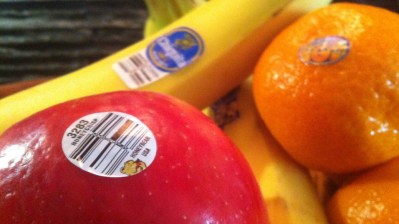
produce with stickers

Shopping for Produce in America – There is every type of fruit or vegetable imaginable available for the taking, regardless of season. Therefore, I must comb through the produce, reading the little labels stuck to the food that I will have to peel away later and wash the skin. Nope, that one is genetically modified. Nope, that one isn’t organic and is in the dirty dozen. Oh great, an organic apple, that’ll be $3 for 1. I make my selections, buying enough vegetation for the week ahead. I don’t buy everything organic; I’m an American peasant after all, but any fruit or veg that is part of the “Dirty Dozen” I have purchased organic. I get a week’s worth of produce for $40 to $60 depending. If I was in Europe, I could’ve saved $20-$40 and used that money towards savings for a condo! But I am in America trying to be healthy, so I will accept the penalty for my choices and continue being a peasant.

078.JPG

Fromagerie in Paris selling fresh, local cheeses.

Shopping for dairy in Europe – Firstly, cheese in Europe is unrivaled by anywhere else in the world. It is all so pure and so fresh or so artfully aged. It’s incredible. America doesn’t stand a chance. But this isn’t just about taste. I go to the local cheese shop to select my cheeses. I am allowed to sample as I shop so I can make a better selection (#winning). Reading the labels and talking to the cheese monger, I learn that there is really nothing to the cheese except milk and the other flavor fixings. The milk is pure and unaltered, no added hormones, chemicals or America’s favorite – sugar. It’s just milk from a cow; a cow roaming widely over green pastures. Also, the cheese has come from a nearby dairy farm, so it too is local. I am able to purchase a hulking wedge of both the creamiest brie and the tangiest bleu for a mere 5 euro. 2.50 euro for gourmet cheese?! How is this possible? I am going to eat all of it now and come back tomorrow for more, life can never be this good again.

american dairy

Shopping for dairy in America – My cheese selection is stressful. I have to really read into the labels to see where the cheese is coming from and if the milk it is made from was overly treated with chemicals and hormones. Also, finding cheese from a grass-fed, free roaming cow is an Olympic challenge. Oh yay, I found some great selections. That’s $5.75 for a medium sized wedge, that’s $7.25 for an average block. Well, there’s go $13. It’s okay I guess, cheese is worth it, but I know the truth; this cheese could never measure up to the cheese in Europe, and that would’ve costed me ¾ of what this cheese costs for a lot more. Oh well, I knew life would never be that good again, like I said. This is the life of an American peasant.

Shopping for meat in Europe – The meat is fresh, it has not been frozen. Here again, the meat has come from a nearby farm or ranch. Due to the normal European practices when it comes to meat, I know that the beef is from rolling pastures and was grass-fed, I know the chicken was free-range, I know that the fish was not fed coloring. The meat has not been sprayed down with chemicals and preservatives, it doesn’t need to be because they have taken good care of it and are selling it fresh after the catch or kill (sorry veggie friends). This is quality meat, this is the way meat is meant to be treated and eaten, this is somewhat sustainable. The meat – again being grass-fed/free range/wild caught/not treated etc. – costs maybe three quarters of what the same quality of meat would cost in the United States. Also, the Europeans don’t sell you huge cuts and chunks, servings are much smaller so that even though you are eating meat, you are eating less and really enjoying it.

meat america

Shopping for meat in America – There are lots of meat selections, and of those selections, a very small percent of it comes from good, healthy practices. If you want grass-fed, free- range, not color treated, you have few choices and they are expensive. That filet mignon that comes from the ranch in the center of California where the cows are standing in their own dung and have cancerous puss on their faces costs a reasonable amount, but why would I eat that? Gross. No, if I am going to have beef, it is going to be from a cow that was treated right in its life. Oh hot damn, that single filet mignon is $14; but damn it, I am going to buy meat that is quality because I support the meager amount of sustainable ranching we do in this country. At least the cost keeps me from eating too much red meat, right? But what about the fish? Yup, that salmon was fed pink dye through it’s feed – yummy! No thanks, I’ll go with the wild salmon. *Deep sigh* It’s $13.99 a pound and I’m feeding four people, so I need a pound; so now that’s another $14 after my $45 worth of semi-organic produce and my $13 of cheese, and we haven’t even gotten the most important item on the grocery list – wine; maybe I shouldn’t go to the movies tomorrow after all.

junk.jpg

What about the junk food – Oh yeah, let’s not forget that food group! Europe has junk food just like us, a lot of the same brands in fact, though some of their products are banned because they put additives in the foods that are not permitted in the EU, but America doesn’t seem to find anything wrong with them! The big difference, however, is that you have to really go out of your way to get it. The normal everyday markets don’t have it; they’re too busy selling real, whole foods at decent prices and supporting the local economy. If you want sugar laden bags of cookies and sodium rich chips, you’ve got to go to the convenience store, like a liquor store or gas station; you won’t find it at the markets. In America, the processed, sugar filled, chemically laden stuff is mixed in right next to the good foods, and it’s cheap, so it’s easy to gravitate towards all the junk and skip the good food choices because it is right there and it is cheaper than the $3 organic apple.

Also, Americans like stuff. If you’re spending too much money on healthy foods, you can’t buy as much superfluous stuff. So naturally, they make dinner a sodium and sugar frozen entrée and go shopping for poorly made clothing from China.

In conclusion – here’s the big difference between Europe and America when it comes to groceries: Europe makes healthy, nutritious eating accessible and America does not. Sure, America is the richest country in the world and we have access to everything, but because of the way we price the good food and then place it next to the bad food, and because of normal American saving and spending habits, shoppers make the in-nutritious and downright unhealthy choices.

Europeans can easily purchase fresh, organic fruits and vegetables, well cultured dairy, minimally processed grains and bread, and soundly raised and cared for meats without breaking the bank. In this way, even a struggling family can feed themselves whole meals. In America, if you want to make healthy choices, you are forced to pay a premium, as if you are doing something exclusive and risqué. Many Americans are unwilling and often unable to pay these premiums, so they make the unsound choices, and this leads them to being overweight, malnourished, and often sick, which ultimately feeds into the risen numbers of obesity, diabetes, and cancer that we are seeing in this country, which then all feeds into our wonderfully sound healthcare system (sarcasm). It’s a vicious cycle.

370.JPG

We simply must evolve our food system to be one that supports the selling and eating of whole foods. If we can find avenues to make fresh and often organic produce, minimally processed diary and grains, and well cared for meats (while also lessening meat consumption), then we will be supporting a healthier and happier society overall, which I think is what we all ultimately want. It is going to take a lot of work; work within ourselves for how we look at food and value it, and work for how we go about growing, cultivating, and selling it.

Again, this is just one of the many critiques I and many others have for the American food system. Again, I wish not to sound unpatriotic (though I often feel that way). Keep in mind, however, that we are a country of free thinkers who are encouraged to critique in order to help us to become an even stronger and better nation; and that is probably something I will do until I die. Namaste.

Rome is Burning – A Misguided Mentality of Corporate America

Let’s talk about Corporate America for a second. Where to begin? There is a lot we could talk about; how it can serve and how it can destroy. As an employee of Corporate America, I struggle with many of its different facets all the while I am kept fed and housed by it. So yes, I serve it and it serves me, but that does not mean I will not criticize it where it needs to be criticized and I will not rest until it is changed in certain ways.

america

One of the aspects I see needs to be addressed is the mentality that many corporate workers carry with them at all times: that what they are doing is the most important task ever and when something goes wrong it is literally the end of the world.

panic

A typical corporate reaction over nothing.

Working for a large corporation and interacting with many others, I am often witness to scenes of utter panic and chaos over the most trivial of issues. I am a spectator of business peoples vehemently arguing over how impactful their strategic plan is and how it absolutely must be executed with the utmost care and importance or else. And sadly, I am bystander watching people making their work place and tasks the center of their lives while they neglect the riches they have outside of the offices – family, friends, opportunities for, you know, actually living.

It all drives me crazy.

crazy.gif

Crazy I tell you.

Sometimes I ignore it. Sometimes I remark sarcastically about it (because I am a prince of sarcasm). Sometimes it makes me so angry that I practice ujjayi pranayama at my desk just like I teach in my yoga classes.

Most corporations produce goods or sell services. Sure, many of these goods and services are very useful, and some may even argue important. However, when something goes wrong within one of these corporations, the level of reaction is not at all proportionate with the problem itself. Everything is not just blown out of proportion, it’s not just blown out of this world, it is blown all the way out of the Milky Way Galaxy to Andromeda  (the aliens out there probably think we are bat-shit crazy and that’s why they only come around so often).

aliens

You ridiculous humans.

In my corporate experiences, I cannot tell you how often I have watched something go “wrong”, and then witnessed the chain of reactions throughout the organizations on levels so absurdly extreme that one would think an asteroid was tumbling toward Earth and all was lost.

With every little problem that arises –

Rome is burning

rome

The zombies are among us

zombies

And the Antichrist has risen.

anti christ.gif

With every decision that must be made, these corporate slaves discuss the possibilities so seriously that you would think they were deciding whether or not to invade a neighboring country or drop a nuke on another nation, but they are really just trying to figure out what their next commercial should say.

really

PEOPLE! Is any of this really that important? In the scheme of things, does it really make a difference? Are you saving lives? Are you solving world hunger? Are you figuring out how to fix this often broken world? NO! YOU’RE NOT! So take a deep breath, light a candle, have a cookie (or better yet, an apple with some almond butter) and please chill the F*** out.

breathe

Let us breathe.

Now, please don’t let me be misunderstood, this is not to say that people’s jobs and interests are unimportant. I am sure whatever you and your friends do has its worth. I am simply saying that in American businesses, we take ourselves WAY too seriously.

We no longer look at the big picture; if we did, we would see that even when there is a big business problem, the sun will rise tomorrow and life will go on. If we could shift our mental perspectives to “Oh dear, yes this is an issue, but it’s not the end of the world,” then we would probably be able to face said issues with clearer, calmer minds which would make us feel better overall and wouldn’t affect the people around us negatively.

cool it

Corporate America has to stop making itself sick with worry and stress. It has to stop taking a minute problem and morphing it into a monster to use and terrorize all those within email-distance. It has to stop creating such negative energies over issues that in the scheme of the world don’t actually make a lasting impact.  It has to stop taking itself so seriously that its people can no longer actually live their lives and enjoy them.

So please my soldiers of the corporate world, work well and work hard, but remember what is really important in life and don’t let your work and its problems overshadow it. Please take a breath. Please chill the F*** out.

namascray.jpg

Big Magic: Creative Living Beyond Fear – Book Review

You know Elizabeth (Liz) Gilbert, because I know you have seen and/or read Eat Pray Love – that’s her book. And though you may only associate her as the woman who found herself through her time  eating in Italy, meditating in India and loving in Indonesia; what you may not be as aware of as I am is that Liz Gilbert is an earth-bound angel sent to help us capture inspiration and liberate our creativity in our daily lives. I’ve listened to her talks and interviews and read other works of hers and her words always touch me at my core; it’s the same story with her most recent memoir, Big Magic: Creative Living Beyond Fear.

In Big Magic, Gilbert touches on many different aspects of creativity and the undeniable human instinct that we have for it. For the book, Liz draws on experiences from her own life, stories from others, and the wise words of many different types of memorable people. It is, in short, a discussion of creativity, its importance to us and our world, and how we should go about treating it, cultivating it, and living it.

Now, I am not going to launch into some 10 page essay breaking down every facet of the book and dropping quotes left and write; you don’t need to read much more from me, you don’t need more words to process, you just need to go and read the damn book. The book manages all at once to be informative, educational, comical, thought-provoking and, well, inspiring. You’ll love it!

With that said, if you’d like to read on, I would like to share a few of my biggest, personal takeaways from my read of Big Magic.

idea

Inspiration and Ideas are often external forces – Gilbert theorizes that the inspiring thoughts and ideas that come to us do so in the literal sense of the phrase – they come to us from somewhere else, outside of ourselves. In a sense, she discusses the intriguing possibility that the ideas that spark us to create are their own beings of energy and light floating around, and they seek a vessel – a person – through whom they can be brought into the physical world. Ever had an idea that you thought, “Huh, that’s really cool!” but you never acted on it, and then a month, a year, or even a decade later you see that idea come into reality by someone else and you think, “Hey! That was my idea!” but you accept it as a mere coincidence? I know you have, we all have. Well, you probably did have that very idea. That idea probably chose you to try be born through, but you didn’t do anything with it. And so, it left you and moved onto someone who could and would bring the idea into reality.

I found this discussion in Big Magic to be incredibly intriguing. I had heard Gilbert discuss this topic before in this TED Talk, and at first I wasn’t sure what to make of it. After reflecting a bit, I’ve come to realize that I totally and completely agree with this concept of the external idea. Have you ever had a thought or idea that when you first thought it up you believed it to be the greatest idea ever, but then you didn’t write it down fast enough and no matter how hard you try you simply can’t remember what that idea exactly was? We’ve all had it happen; the poem or song you dreamed up but didn’t pen down and now you can’t remember how it went in your head, the storyline of the epic novel that would be riveting but you didn’t draw it out fast enough and now the storyline isn’t as strong, etc. I have had ideas – flashes of inspiration – but I didn’t eternalize them fast enough; and when I go to remember them, no matter how deeply I rack my brains, I simply can’t remember them at all! I have lost great ideas and tore myself apart in search of finding them again, but I can’t. Why? Because they are nowhere to be found within me; they have literally left my body and my conscious and moved onto a person that will act on them more quickly and birth them into the mortal world where they can touch others.

This is not to say that this theory discredits people who appear to always be brilliant in terms of creativity and may even be called geniuses. Rather, the theory supports the idea that some people are great vessels or instruments for catching the ideas that are floating around in the ether, working with them, and developing them into something truly amazing. We can be creative people, but we just have to be open to reaching out into the universe and catching the right ideas that we can then work with to create. As you can tell, this was a hugely important part of the book for me; I’d be interested to hear your thoughts on the subject.

personal-freedom

Stop putting requirements and expectations on your creativity – In Big Magic, Liz implores us to not burden our creativity with fantastical expectations and goals. Translation: stop telling your creativity that it must make you X amount of dollars so that you can leave your day job, stop telling your creativity that it must make you famous and adored, stop telling your creativity that it must produce more than the art you are making it for. This type of energetic thinking does no one service; it limits your creativity, it creates stress and longing within yourself, ultimately leads to sacrifice on the part of the creativity, which eventually leads to frustration and disappointment. There is no point to this! Be kind to your inspiration and creativity and do it simply for the fact that you feel compelled to do so without any attachment to the end result!

This was a very important takeaway for me. Look at this blog, Johnny La Pasta, for instance. This blog is one of my creative endeavors; through it, I pursue my creativity namely in relation to cooking, yoga, and lifestyle all through the medium of writing. Lots of other people do this too, and many of them make money for it – like lots of money for it. And so, I have at times placed expectations on my work for this blog that it will earn me a larger income than what I currently make, allow me to work from home, afford me more funds and time to travel, etc. When I have placed these bar marks on my work for Johnny La Pasta, I have noticed that my writing becomes more difficult and I become more stressed – especially when I am not seeing the high expectations that I created met. Now sure, the goal of turning my blog into a fiscally viable line of work is a decent and respectable goal, but I now refuse to make it a requirement of my work here. I create the posts and stories that I do because I have a passion for writing and the topics that I am writing about. I cannot burden my writing and artistic impulses with grand schemes. Instead, I will continue to create what I do because I feel compelled to and because I want to!

So, create because you feel it is something that you need to do, and do it without attachment or expectation. Enjoy the process, enjoy the result, be not disappointed by any of it!

splatter

Humans are meant to create…SO CREATE! – History tells us that humans have a deep need and will to create. Ever since ancient people figured out how to make scrapes on cave walls, we have been creating. We have been creating even at times where it doesn’t even make sense to create. When there is famine, plague, and terror; logically you would think that all creative endeavors would stop because there is a greater need to focus on tasks that support survival, but still, people continue to write and draw and paint and sculpt and weave and more throughout all of it. Creativity is nearly as a basic a need for people as food, sleep and sex. As a collective species, we have an insatiable desire to create and so we do.

In Big Magic, Gilbert tells us to follow our creative impulses when they come. Creating is good for us on many levels; it’s like a vitamin for the mind and the soul. And anyone can take that vitamin.

For some reason, we have come to believe that to create you must be creative, creative in the Pinteresty sense of the word. We have come to believe that if you want to create you must be a genius or a prodigy in one medium, only then can you actively and often create. The truth is, however, that anyone can be creative at any time. We can all be creative in big and small ways on a day to day to basis. This does not mean that what you create has to publishable or producible or worthy of a nomination. You create whatever you want simply because you feel the need on any given day; no one has to see or know about it, you don’t have to judge and critique after the fact. All you have to do is enjoy the process of it!

Look at children. They take a piece of paper and some crayons and just go for it. They aren’t attached to the end result. They aren’t worried about winning an award for it. They just see pretty colors in the crayon box, inspiration strikes them, and they ride that wave and create. The tree they set out to draw might end up looking like deformed purple octopus; but who cares? They certainly don’t. They are creating for the hell of it, and that’s beautiful. Let’s be more like that.

Are you a plumber with a poem ringing through your head? Write that poem! It doesn’t matter that you are a plumber, if you’ve got the inspiration, act on it. Even if it turns out as ghastly as some of the jobs you encounter in your plumber duties, just get it out of you and enjoy it for what it is! Are you a mechanic with music radiating between your ears? Pick up and instrument and play and sing it loud! It could be great, it could be okay, it could sound like cats dying; it doesn’t matter! Are you a screenwriter with a silver screen idea in your mind’s eye? Write that damn screenplay without concern of whether or not a studio executive would buy it or even like it. Ski that slope of creative energy for as long as it goes.

Okay, I’ll stop now, you get the picture. The point is, Big Magic was a reminder for me that creating is fun and it is healthy and it is accessible at some level to all of us at all times; so we should do more of it.

And with that, I hope I inspire you to read Big Magic: Creative Living Beyond Fear.

big magic 2.jpg